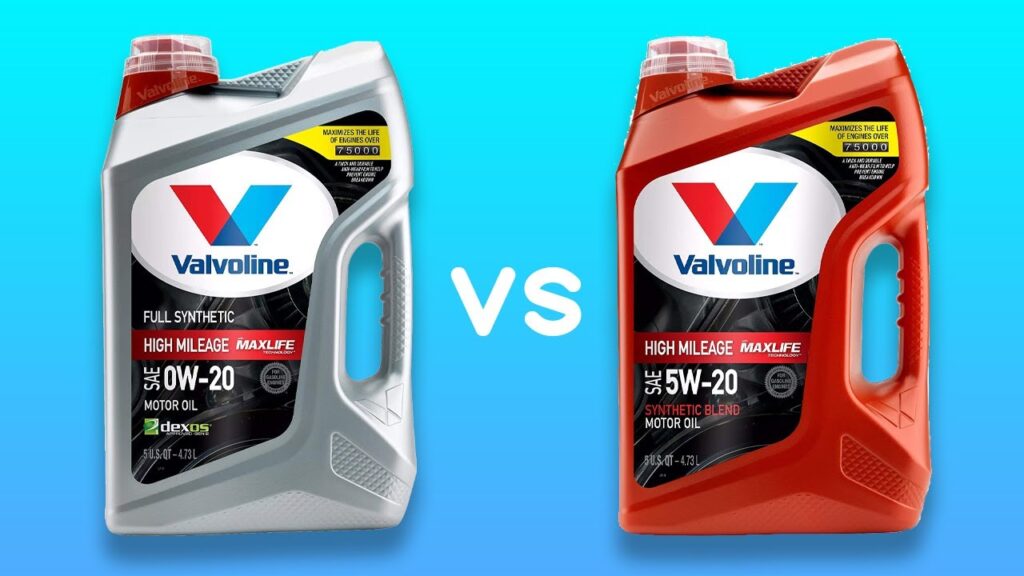
Choosing the right motor oil is crucial for engine longevity and performance—especially in Canada, where temperatures can plunge to -40°C in winter and soar past 30°C in summer. Among the most commonly recommended oils for modern vehicles are 0W-20 and 5W-20. But what’s the difference, and which one is better for Canadian conditions?
Limited Time Automotive Amazon DealsIn this article, we’ll compare 0W-20 vs 5W-20 in terms of viscosity, cold-weather performance, fuel economy, vehicle compatibility, and long-term engine protection. If you live in Canada and are unsure which oil is right for your car or truck, this guide is for you.
🧪 Understanding Oil Grades: What Do 0W-20 and 5W-20 Mean?
The numbers in motor oil labels refer to viscosity, or the oil’s resistance to flow. The “W” stands for “Winter”, not weight. Here’s how it breaks down:
- 0W-20: Flows like a 0-weight oil in winter and a 20-weight oil at normal engine operating temperatures.
- 5W-20: Flows like a 5-weight oil in cold temperatures and also acts like a 20-weight oil when hot.
Both are multi-grade oils, meaning they adapt to temperature changes, but 0W-20 is thinner at cold start.
❄️ Cold Weather Performance in Canada
Canada’s long, cold winters make low-temperature oil performance a top concern.
| Oil Type | Low-Temp Flow | Best Use in Canada |
|---|---|---|
| 0W-20 | Superior | Northern provinces, harsh winters (e.g., Alberta, Manitoba, Quebec) |
| 5W-20 | Good | Milder winters (e.g., Vancouver Island, Southern Ontario) |
Why It Matters:
- Cold starts are the most stressful time for engines.
- 0W-20 flows more easily at -30°C or lower, reducing engine wear at startup.
- In extreme cold, 5W-20 may take longer to reach engine components, increasing friction.
Conclusion: For most Canadians—especially those outside southern B.C.—0W-20 is a better winter choice.
🔥 Warm Weather & Summer Driving
In warmer months, both 0W-20 and 5W-20 behave like SAE 20-weight oils when the engine is at operating temperature (typically ~100°C).
| Factor | 0W-20 | 5W-20 |
|---|---|---|
| Summer Protection | Excellent | Excellent |
| Highway Driving | Fully capable | Fully capable |
| Towing/Heavy Load | Adequate, but 5W-30 or 5W-40 might be better in extreme cases |
Conclusion: In summer, there’s virtually no performance difference between 0W-20 and 5W-20. If your engine runs hotter (e.g., from towing), consider 5W-30 or manufacturer-approved synthetic blends.
🛢️ Engine Protection and Longevity
When comparing engine wear over time:
- 0W-20 may reduce startup wear more significantly, especially in cold climates.
- 5W-20 still provides excellent protection but may lag slightly in winter cold starts.
Both oils:
- Meet API SP or SN Plus specifications
- Include detergent and anti-wear additives
- Are commonly synthetic or synthetic-blend
Conclusion: For long-term engine health in cold climates, 0W-20 has a slight edge.
⛽ Fuel Economy
Automakers increasingly recommend low-viscosity oils like 0W-20 and 5W-20 for fuel efficiency.
| Oil Type | Fuel Economy Impact |
|---|---|
| 0W-20 | Slightly better (1–2% gain) |
| 5W-20 | Still efficient |
0W-20’s thinner flow at startup reduces engine drag slightly more than 5W-20, which could translate into minor fuel savings over time, especially for city driving with frequent starts.
🚗 Manufacturer Recommendations
Most modern vehicles in Canada (2011 and newer) specify either 0W-20 or 5W-20 depending on the make and model.
| Vehicle Brand | Common Oil Recommendation |
|---|---|
| Toyota, Honda, Subaru | 0W-20 |
| Ford, GM | 5W-20 or 0W-20 |
| Hyundai, Kia | 0W-20 or 5W-20 |
| Mazda | 0W-20 |
🔧 Important: Always follow your owner’s manual or manufacturer’s oil spec. Switching from 5W-20 to 0W-20 is generally safe, but verify that it’s approved for your engine.
🌍 Environmental Impact
Both oils are usually synthetic or synthetic-blend, meaning they:
- Last longer than conventional oils (7,500 to 16,000 km)
- Offer reduced environmental waste due to extended change intervals
- Are recyclable in Canadian oil recycling programs (e.g., BC Used Oil Management Association, Ontario’s Orange Drop)
📊 Summary Table: 0W-20 vs 5W-20 for Canadian Drivers
| Feature | 0W-20 | 5W-20 |
|---|---|---|
| Cold Start Protection | ✅ Excellent (best for Canada) | ⚠️ Good (milder climates) |
| Warm Temp Protection | ✅ Excellent | ✅ Excellent |
| Fuel Efficiency | ✅ Slight edge | ✅ Efficient |
| Engine Wear Reduction | ✅ Better startup flow | ⚠️ Slightly slower flow |
| Recommended For | Most new vehicles in Canada | Some older/newer vehicles |
🧰 When to Choose One Over the Other
Use 0W-20 if:
- You live in cold climates (e.g., Edmonton, Winnipeg, Ottawa)
- Your manufacturer recommends it
- You want maximum fuel economy
- You perform frequent short trips or cold starts
Use 5W-20 if:
- You live in a milder region (e.g., Vancouver, Victoria)
- Your vehicle’s manual specifies 5W-20
- You’re topping off between oil changes in compatible engines
🇨🇦 Canadian Oil Brands and Availability
Top synthetic oil brands available across Canadian tire shops and dealerships:
| Brand | Available at | Typical Price (5L jug) |
|---|---|---|
| Mobil 1 | Canadian Tire, Costco | $39–$52 |
| Pennzoil Platinum | Walmart, NAPA | $36–$49 |
| Castrol EDGE | Canadian Tire, PartSource | $42–$55 |
| Kirkland (0W-20) | Costco | ~$38 (2-pack of 5L) |
Tip: Look for API SP or ILSAC GF-6 certification for best engine protection.
🔚 Final Verdict: 0W-20 vs 5W-20 in Canada
In Canada’s climate, especially for drivers outside the west coast, 0W-20 is typically the better choice. It offers better low-temperature protection, potentially better fuel economy, and aligns with the specifications of many Canadian vehicles.
That said, 5W-20 remains a solid choice for vehicles designed for it, particularly in milder areas or when doing oil top-ups between services.
Bottom line: Follow your manufacturer’s recommendation, and if you’re driving in cold provinces, 0W-20 is the safest bet for Canadian winters.